Brick Weave House
A Tapestry of Earth and Texture, Bound in Brick
“A home need not be defined by its walls, but by the light it welcomes, the air it breathes, and the quiet conversation it holds with the earth.
When boundaries soften, living begins.”
Brick Weave House
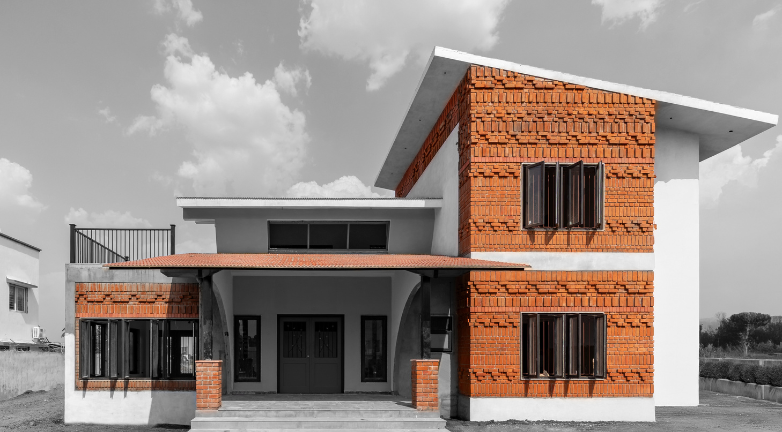
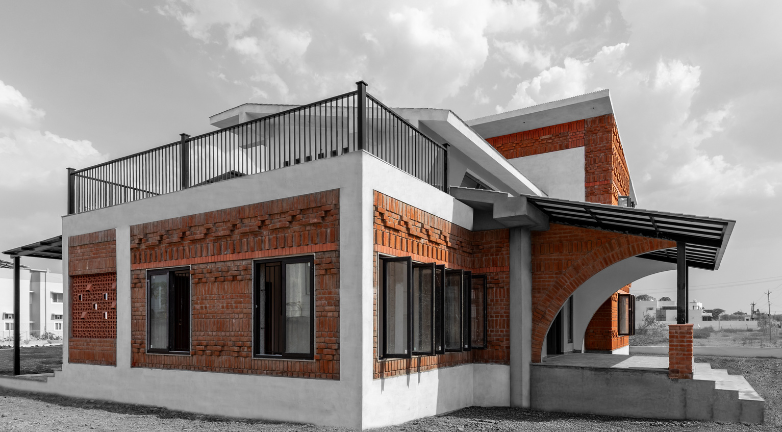
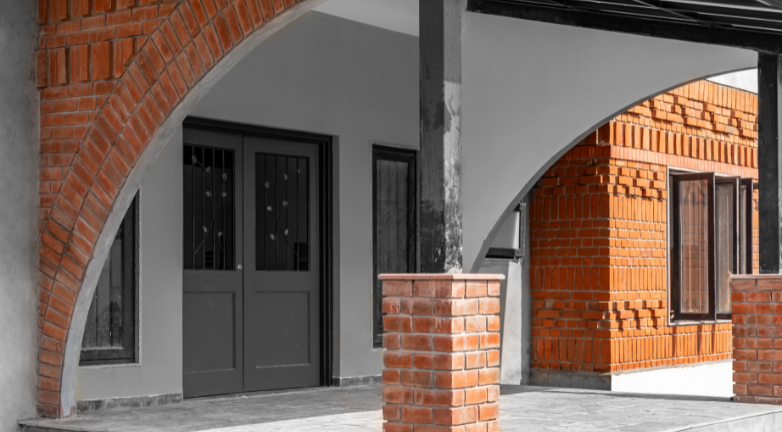
Set within the semi-urban landscape of Mhow, Madhya Pradesh, this residence responds to its west-east-oriented site and local climate through a considered interplay of materiality, spatial hierarchy, and orientation. Rooted in a quiet yet deliberate architectural language, the design bridges vernacular sensibilities with contemporary clarity. More than a home, the project unfolds as an experiential passage—where light, air, and tactile surfaces shape a domestic environment that is both climatically attuned and emotionally grounding.
Location: MHOW, Indore
Built type: Residential Bungalow
Total built-up area: 3000 sqft
Building footprint: 4000 sqft
Plot area: 10000 sqft
Year of completion: 2025
Design Philosophy
The home draws from the principles of Vastu Shastra and climatology, interpreted in a way that aligns with the lifestyle of a modern Indian household. The layout reflects a clear respect for cardinal directions, aligning sacred and functional spaces according to Vastu, while also optimizing for passive solar gain, ventilation, and thermal comfort—vital in Mhow’s composite climate.
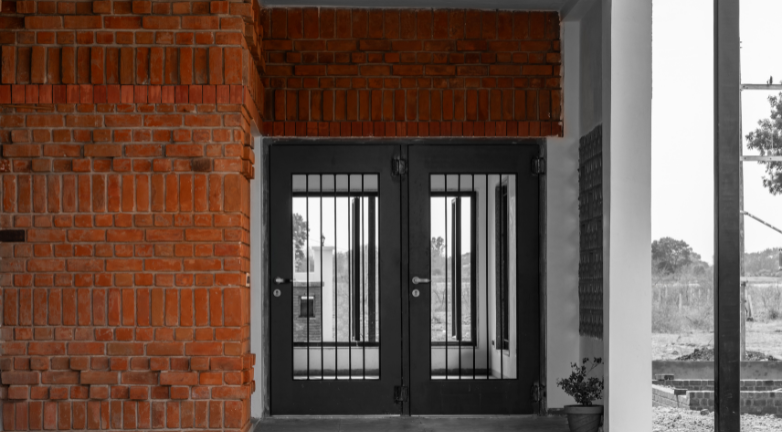
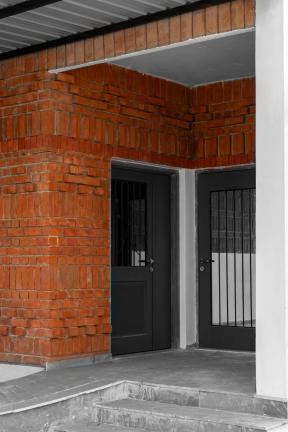
Every material choice—exposed brick, stone, glass block—has been made not just for its aesthetic appeal, but for how it behaves with time, light, and weather. The architecture fosters a connection with the outdoors while embracing local construction skills, making it a site-sensitive and community-rooted project.
Design Details
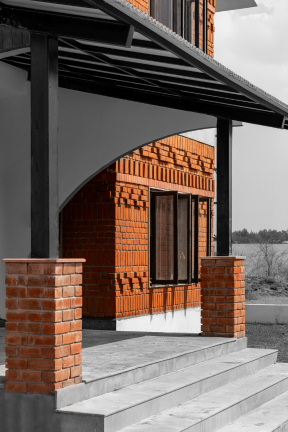
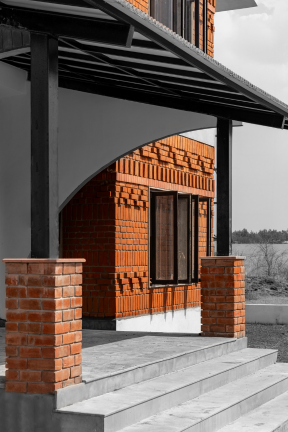
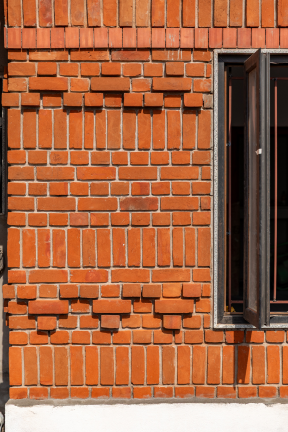
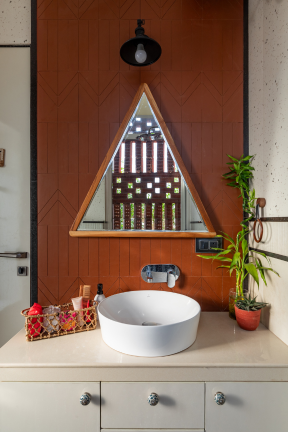
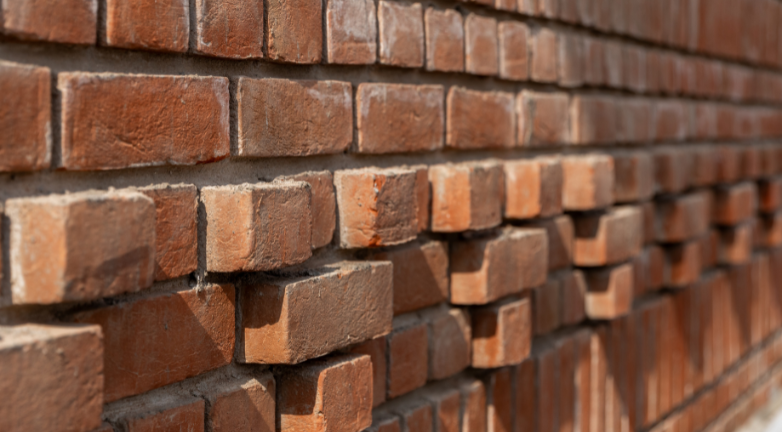
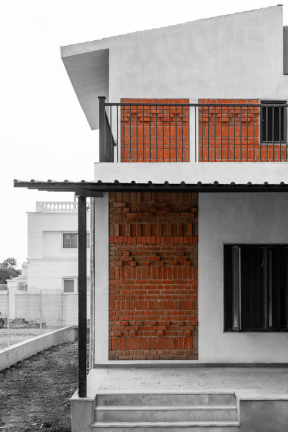
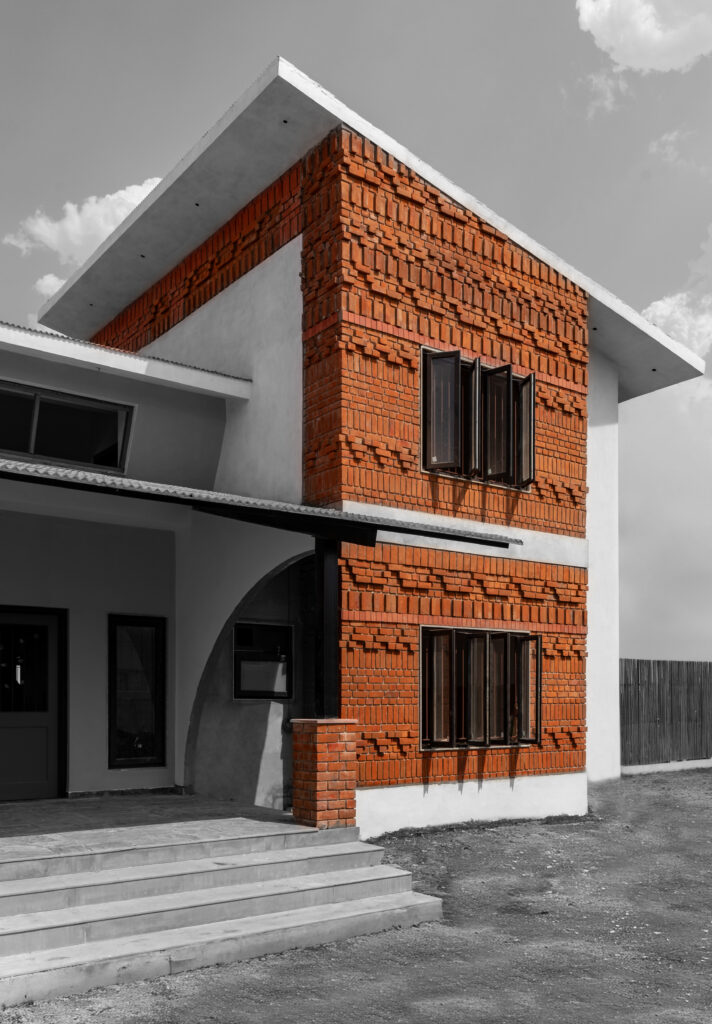
The west–east site orientation ensures morning light enters living spaces from the east, while service zones to the west buffer against harsh afternoon sun. Vastu principles guide the layout: the puja and entrance court sit in the northeast, the kitchen in the southeast (aligned with the fire element), and bedrooms are placed in the southwest and northwest for privacy and ventilation. Passive design strategies such as cross ventilation and the stack effect enhance natural airflow. Staggered brick projections on the façade create shifting shadows and thermal insulation, while glass blocks diffuse light, reduce glare, and maintain privacy in transitional zones.
Craftsmanship and Community Involvement
Rooted in local identity, the project is built using regionally sourced materials and executed by skilled local masons. It celebrates traditional craftsmanship through a contemporary lens—most notably through the intricate brick weave work that lends texture, ventilation, and artistry to the façade. This blend of heritage techniques with modern spatial and material clarity makes the home a living expression of community skill and cultural continuity.
Material Palette and Construction Detailing
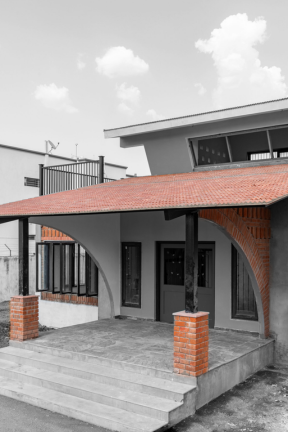
Material choices emphasize tactile warmth, thermal comfort, and visual depth. Exposed terracotta bricks provide thermal mass and rich texture, while local granite is used to frame structural openings and window sills. Steel grilles and railings reinterpret traditional security details, blending craftsmanship with contemporary clarity.